
Craft Accessories, Craft Store, Crafts and Gifts, stencils
A Beginner’s Guide to Paint Brushes for Arts, Crafts & DIY Projects
Aug
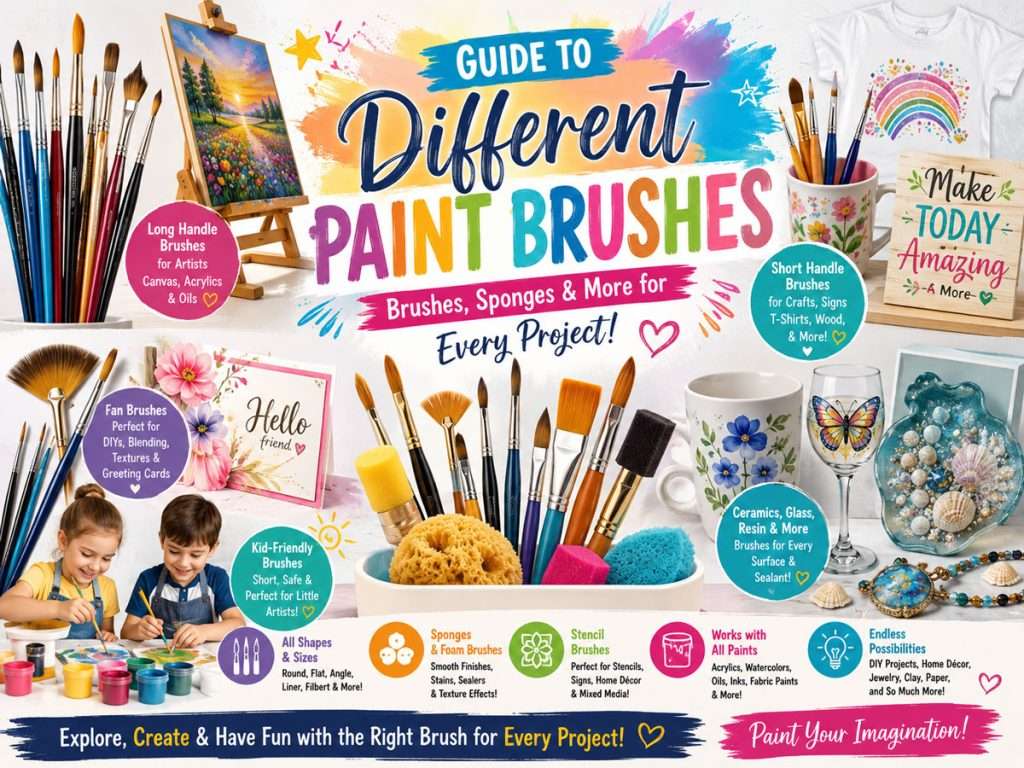
Guide to Paint Brushes for Arts, Crafts & DIY Projects
Have you ever walked into a craft store and wondered why there are hundreds of different paint brushes to choose from?
- Round brushes, flat brushes, angled brushes, foam brushes, stencil brushes, artist brushes, kids’ brushes – where do you even begin?
The good news is that you don’t need to own every brush available. In fact, a small collection of good-quality brushes can handle most arts and crafts projects.
This guide to paint brushes is designed for beginners, hobbyists, DIY enthusiasts, and crafters who simply want to have fun creating. It is not intended to be a complete or professional reference. Experienced artists often develop personal preferences and techniques that may differ from the suggestions below.
Choosing the Right Brush for Every Arts & Crafts Project – Guide to Paint Brushes
Let’s explore the wonderful world of paint brushes! – Why Are There So Many Different Brushes?
- Every brush is designed to make a particular job easier.
- The size, shape, length of the handle, and type of bristles all affect how paint is applied and the type of finish you can achieve.
- Sometimes choosing the right brush can make a project much more enjoyable.
Natural vs Synthetic Bristles
Natural Bristles
- Natural bristle brushes are commonly made from animal hair.
They are often used with:
- Oil paints
- Oil-based varnishes
- Certain waxes
- Traditional finishes
Natural bristles hold a lot of paint and create smooth coverage with oil-based products. They are generally not recommended for water-based paints because the bristles can absorb water and lose their shape.
Synthetic Bristles
- Most modern craft brushes use synthetic fibres such as nylon or polyester.
They’re excellent for:
- Acrylic paint
- Watercolour
- Craft paints
- Fabric paints
- Latex paints
- Water-based sealers
- Glue and decoupage mediums
Synthetic brushes are durable, easy to clean, and perfect for most DIY craft projects.
Soft, Medium & Firm Bristles
Soft Bristles
Best for:
- Watercolour
- Washes
- Blending
- Delicate details
- Smooth finishes
Medium Bristles
A great all-purpose option for:
- Acrylic paints
- Craft paints
- Decorative painting
- Canvas
- MDF
- Wood crafts
Firm Bristles
Ideal for:
- Stippling
- Dry brushing
- Textured effects
- Applying thicker paints
- Some stencil work
YouTube Videos – A guide to paint brushes: These videos show different brushes and how one uses them – Beginners and Advanced.
Brush Shapes
Round Brushes – One of the most versatile brushes.
- Great for:
- Outlines
- Lettering
- Fine details
- Flowers
- Leaves
- Small craft painting
Common sizes range from tiny detail brushes (such as size 0 or 1) to much larger rounds.
Flat Brushes
- Perfect for:
- Large areas
- Straight edges
- Backgrounds
- Base coats
- Blending
The wider the brush, the faster you’ll cover a surface.
Bright Brushes
These look similar to flat brushes but have shorter bristles.
- Useful for:
- Thick acrylic paints
- Controlled strokes
- Small decorative painting
Filbert Brushes
A combination of flat and round.
- Their rounded tip makes them popular for:
- Flowers
- Leaves
- Soft blending
- Portraits
- Decorative painting
Angled Brushes
- Excellent for:
- Corners
- Curved edges
- Leaves
- One-stroke painting
- Decorative borders
- Painting around mouldings
Fan Brushes
Recognisable by their fan shape.
- Often used for:
- Grass
- Fur
- Trees
- Clouds
- Texture effects
- Light blending
Liner or Script Brushes
Very thin with long bristles.
- Great for:
- Fine lines
- Lettering
- Vines
- Pinstriping
- Sign painting
- Decorative flourishes
Sponge Brushes (Foam Brushes)
Foam brushes are one of the most useful tools in any craft room.
- They’re inexpensive and ideal for:
- Applying stains
- Varnishes
- Polyurethane
- Mod Podge glue and varnish
- Glue
- Base coats
- Smooth finishes
- Touch-ups
Foam brushes are especially useful when brush marks need to be minimised.
Many crafters use them once and discard them, especially when working with glues, varnishes, or resin products.
Painting Sponges
Painting sponges are different from sponge brushes
- They create decorative textures such as:
- Clouds
- Marble effects
- Stone effects
- Faux finishes
- Background textures
- Mixed media projects
They’re also popular for children’s crafts because they’re fun and easy to use.
Stencil Brushes
Stencil brushes have short, firm bristles with a flat end.
Instead of brushing paint across the stencil, they’re usually dabbed or lightly swirled onto the surface. (Wipe excess paint onto a paper towel before stencilling.)
This helps reduce paint bleeding underneath the stencil.
- Great for:
- Signs
- Home décor
- Furniture
- Scrapbooking
- Greeting cards
- Mixed media
- Fabric projects
Artist Brushes
- Professional artists often choose brushes based on the paint they’re using.
Watercolour Brushes
- Usually soft and absorbent.
- Designed to hold plenty of water while creating smooth washes and delicate details.
Acrylic Brushes
- Often synthetic.
- Available in almost every shape imaginable.
- Suitable for everything from tiny details to large canvas paintings.
Oil Brushes
- Typically firmer than watercolour brushes.
- Designed to move thicker paints and create texture.
Long Handle vs Short Handle
Long Handles
- Usually preferred for:
- Easel painting
- Canvas work
- Oil painting
- Acrylic painting
- Working from a distance
Short Handles
- Popular for:
- Watercolour
- Craft painting
- Detail work
- Rock painting
- Ceramic painting
- Kids’ crafts
- Close-up projects
Many hobbyists also find short handles more comfortable when working at a table.
Brushes for Different Surfaces
Different surfaces may benefit from different brushes depending on the paint or finish being used.
Wood
- Great choices include:
- Flat brushes
- Foam brushes
- Angled brushes
- Stencil brushes
MDF
- Works well with:
- Acrylic craft paints
- Flat brushes
- Foam brushes
- Detail brushes
Canvas
- Common choices include:
- Flats
- Filberts
- Brights
- Rounds
- Fans
Paper
- Ideal brushes include:
- Watercolour brushes
- Soft rounds
- Detail brushes
- Wash brushes
Greeting Cards
- Small brushes are perfect for:
- Lettering
- Watercolour details
- Stamping accents
- Ink washes
- Decorative painting
Glass
- Glass paints often work well with:
- Soft synthetic brushes
- Detail brushes
- Foam brushes for larger backgrounds
Always follow the paint manufacturer’s curing or baking instructions if required.
Ceramic Tiles
- Popular options include:
- Detail brushes
- Round brushes
- Flat brushes
- Foam brushes
Special paints designed for glass and ceramics usually produce the best results.
Ceramic Bisque & Pottery
- Many ceramic painters use:
- Soft synthetic brushes
- Detail liners
- Wash brushes
- Fan brushes
Different glazing techniques may call for different brush styles.
Clay Projects
- Brushes can be used for:
- Painting
- Antiquing
- Applying washes
- Glazing
- Sealing
Plaster Crafts
Plaster accepts paint beautifully.
- Useful brushes include:
- Large flats
- Foam brushes
- Detail brushes
Brushes for Sealers
- Whether applying a water-based sealer, decoupage medium, or certain craft sealants, many crafters choose:
- Foam brushes
- Wide synthetic brushes
- Soft flat brushes
These can help produce a smooth finish with fewer visible brush marks.
Always check the product label for the manufacturer’s recommendations, especially for specialty finishes or resin products.
Resin Projects
- Brushes are sometimes used to apply resin to small areas, spread thin coats, or apply compatible sealants before decorating.
- Many resin artists prefer disposable foam brushes or inexpensive synthetic brushes because cured resin is difficult to remove.
Always follow the resin manufacturer’s safety and application instructions.
Kids’ Paint Brushes
Children enjoy brushes that are easy to grip and durable.
- Common choices include:
- Chunky handles
- Soft synthetic bristles
- Foam brushes
- Sponge stampers
- Jumbo flat brushes
- Round brushes
Washable paints make cleanup much easier.
Paint Brush Markers & Ink Pens
Not every project requires a traditional paint brush.
- Many crafters also enjoy using:
- Paint brush markers
- Acrylic paint pens
- Water brush pens
- Calligraphy brush pens
- Alcohol markers
- Fine liner pens
- Gel pens
- Metallic pens
- Ink brushes
These tools are wonderful for colouring books, greeting cards, journals, planners, doodling, hand lettering, and mixed media projects.
Caring for Your Brushes
A little care can help brushes last much longer.
- Some helpful tips:
- Clean brushes as soon as possible after use.
- Use water for water-based paints.
- Use the appropriate brush cleaner or solvent for oil-based products.
- Avoid leaving brushes standing in water for long periods.
- Gently reshape the bristles before drying.
- Let brushes dry flat or with the bristles pointing downward when possible.
- Store clean brushes where the bristles won’t become bent or crushed.
Fun DIY Ideas
- Here are just a few projects where different brushes can shine:
- Birdhouses
- Wooden signs
- MDF plaques
- Canvas paintings
- Rock painting
- Flower pots
- Ceramic mugs (with suitable paints)
- Decorative tiles
- Seasonal ornaments
- Greeting cards
- Scrapbooking
- Journal pages
- Home décor
- Holiday decorations
- Mixed media art
- Stencilled cushions
- Painted picture frames
- Wooden boxes
- Resin accents
- Clay ornaments
Don’t be afraid to experiment. Sometimes an unexpected brush can create a wonderful effect!
Remember:
Paint brushes are simply tools – and like any tool, there is rarely one “perfect” choice for every project. Much of the fun comes from experimenting, trying different techniques, and discovering what works best for you.
Whether you’re painting wood, canvas, ceramics, glass, paper, or creating unique DIY decorations, there’s a brush designed to make the job a little easier. Over time, you’ll naturally develop your own favourites.
Remember, this guide is meant as a friendly introduction rather than a complete reference. Brush manufacturers, paint brands, and experienced artists may recommend different products or techniques depending on the project.
The most important thing is to relax, enjoy the creative process, and have fun. Every brush stroke is an opportunity to learn something new – and sometimes the happiest accidents become your favourite creations!
Discover a world of creativity in our Craft Store, where you’ll find a variety of unique stencils and other fun craft accessories – paint brushes and sponges too – to inspire your next project. If you’re looking for more DIY ideas and inspiration, be sure to browse through our blog posts.
We also have some ready-to-give gifts for any occasion in our Craft and Gift Store if you don’t have time to spend crafting.
Happy crafting!