
Craft Accessories
DIY Fabric Flowers – Easy and Fun Techniques
Mar
DIY Fabric Flowers: A Creative Guide to Making, Styling, and Using Them
DIY Fabric Flowers are easy and fun for kids and adults. Fabric flowers have a quiet charm that makes them endlessly appealing. They can be soft and romantic, bold and modern, or playfully rustic depending on how you make them. Whether you are crafting with children, learning the basics, or refining your technique, fabric flowers offer a surprisingly versatile way to create something beautiful from simple materials.
Choosing the Right Fabric
One of the loveliest aspects of fabric flowers is how adaptable they are. You can use almost any fabric, including scraps tucked away in a drawer. Each type brings its own personality to the finished piece.
Cotton is a dependable choice. It is easy to cut, holds its shape well, and is ideal for beginners. Felt is even more forgiving since it does not fray, making it perfect for children’s crafts and no-sew projects. For something more refined, silk or satin creates a soft, elegant look, while organza or chiffon lends a light, airy quality that works beautifully in layered designs. Heavier materials such as denim or canvas create bold, structured flowers that stand out in décor projects.
Using leftover fabric is not only economical but adds depth and character, especially when you mix textures and patterns.
See YouTube Video Links below:
- DIY Easy Fabric Flowers
- DIY Bling Fabric Flowers Card
Simple DIY Fabric Flower Techniques
There are many ways to make fabric flowers, ranging from quick no-sew methods to more detailed stitched designs. A few foundational techniques can take you surprisingly far.
- Rolled fabric flowers (no-sew) are among the easiest to make. Cut a long strip of fabric, twist it gently, then roll it into a spiral and secure the base with glue. These are perfect for beginners and quick crafts.
- Layered petal flowers involve cutting petal shapes and stacking them to build fullness. You can glue or stitch the layers, then finish with a button or bead in the centre.
See YouTube Video Links below:
- Easy No Sew Fabric Flowers
- How to Make Denim Roses
- Gathered fabric flowers are made by sewing a loose running stitch along a strip of fabric and pulling the thread to create soft ruffles. Once formed into a circle, they create a delicate, textured bloom.
- Heat-shaped flowers are ideal for synthetic fabrics. Carefully applying heat to the edges of petals gives them a natural curve. This method produces more realistic flowers, though it is best suited for adults.
See YouTube Video Links below:
- Mod Podge Fabric Flowers
- Easy Bag DIY Revamp Old Bag Flowers Fabric Mod Podge
Working with Pre-Made Fabric Flowers
If you are using ready-made fabric flowers, you will often notice a small opening or plastic base on the back. This feature is designed to hold stems such as floral wire, pipe cleaners, or thin wooden picks. Floral wire, particularly in the 22 to 26 gauge range, tends to offer the best balance of flexibility and strength.
The centre of these flowers is usually secured with a small internal fastening point and covered with a decorative element such as a bead or resin embellishment. This keeps the petals neatly layered and intact.
If you prefer to use the flowers flat, the stem base can be carefully trimmed away. Once removed, reinforcing the back with a small amount of strong craft glue or a felt circle helps maintain the flower’s shape over time.
Creating Stems That Work
Choosing the right stem depends on how your flowers will be used. Pipe cleaners are soft and easy to shape, making them ideal for children’s crafts. Floral wire is a popular all-purpose option because it is both flexible and sturdy, and it can be wrapped for a more polished finish.
For arrangements that need more structure, wooden skewers or dowel sticks provide strength and height. In some cases, combining a wire with a skewer creates a stable yet adjustable stem.
If your flower does not have a built-in opening, you can attach a stem by gluing or stitching it to the back, then covering the attachment point with felt for a clean finish.
See YouTube Video Link below:
- How to Make Fabric Flowers Green Felt Stems
Styling Tips: Mixing Colours and Textures
A thoughtful mix of colours can elevate even the simplest arrangement. Bright, patterned flowers tend to draw the eye, so they work best as focal points. Pairing them with neutral or pastel flowers creates balance and prevents the design from feeling overwhelming.
Varying sizes also adds depth. Larger blooms anchor the arrangement, while smaller ones fill in the spaces and soften the overall look. This approach works beautifully in bouquets, wall art, and decorative displays.
DIY Projects to Try
Fabric flowers are wonderfully versatile and can be used in a wide range of creative projects.
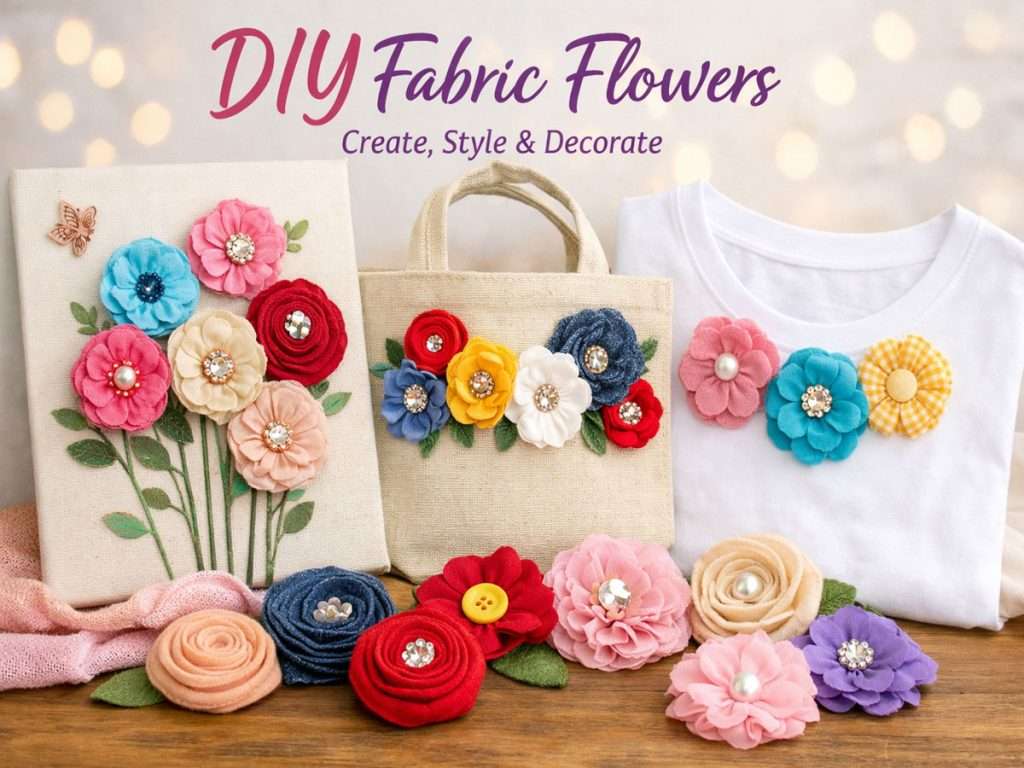
For home décor, they can be arranged on canvas for textured wall art, added to wreaths, or displayed in decorative jars and vases. They also make lovely additions to embroidery hoops or shadow boxes.
In accessories, fabric flowers can be transformed into hair clips, headbands, or brooches with just a bit of glue or stitching. They also elevate gift wrapping, adding a handmade touch that feels thoughtful and unique.
They can even be used in paper crafts. Adding them to handmade cards or scrapbook pages creates dimension and pairs beautifully with lace, ribbon, or metallic accents.
Decorating Clothing and Everyday Items
Fabric flowers can be a subtle or statement-making addition to clothing and accessories. When embellishing items such as t-shirts, tote bags, or cosmetic pouches, lighter fabrics like cotton or felt work best to avoid bulk.
Sewing is the most durable method, especially for items that will be washed. Fabric glue works well for decorative pieces, while iron-on adhesives can be useful for flatter designs.
See YouTube Video Link below:
- How to Make a Flower with Fabric Scraps easy Sewing DIY
Placement makes a noticeable difference. A small cluster near the neckline or shoulder adds interest without overwhelming the garment. A single flower can act as a minimalist focal point, while smaller accents along a pocket or hem create a delicate detail.
For a mixed-media effect, you might even paint or draw stems and leaves onto the fabric and attach only the flower heads.
Making It Enjoyable for Every Skill Level
Fabric flower crafting is naturally adaptable. Children can work with felt shapes, glue, and pipe cleaners, while beginners can explore simple rolled or layered designs. More experienced crafters might experiment with stitching, shaping petals, or combining multiple materials.
The process itself is forgiving and encourages experimentation. Small imperfections often add to the charm, making each flower feel unique.
A Simple Creative Pleasure
Fabric flowers are more than decorative accents. They offer a way to transform everyday materials into something expressive and lasting. Whether you are repurposing fabric scraps or carefully crafting each petal, the result is a small but meaningful piece of creativity that can brighten a space or personalise an object.
Discover a world of creativity in our Craft Store, where you’ll find a variety of unique stencils and other fun craft accessories to inspire your next project. If you’re looking for more DIY inspiration, be sure to browse through our other blog posts as well – you might discover more creative projects you’d love to try.