
Craft Accessories, Craft Stencils, Craft Store, stencils, Stickers
Easy Junk Journaling for Everyone – A Creative, Eco-Friendly Way to Tell Your Story
Sep
Easy Junk Journaling for Everyone – A Creative, Eco-Friendly Way to Tell Your Story
Junk journaling has quietly grown from a niche craft into a widely loved creative outlet. It blends memory-keeping, collage, and storytelling into one beautifully imperfect practice. If you’ve ever saved a ticket stub, admired old paper textures, or wanted a low-pressure way to be creative, easy junk journaling offers a welcoming place to begin.
What Is Junk Journaling?
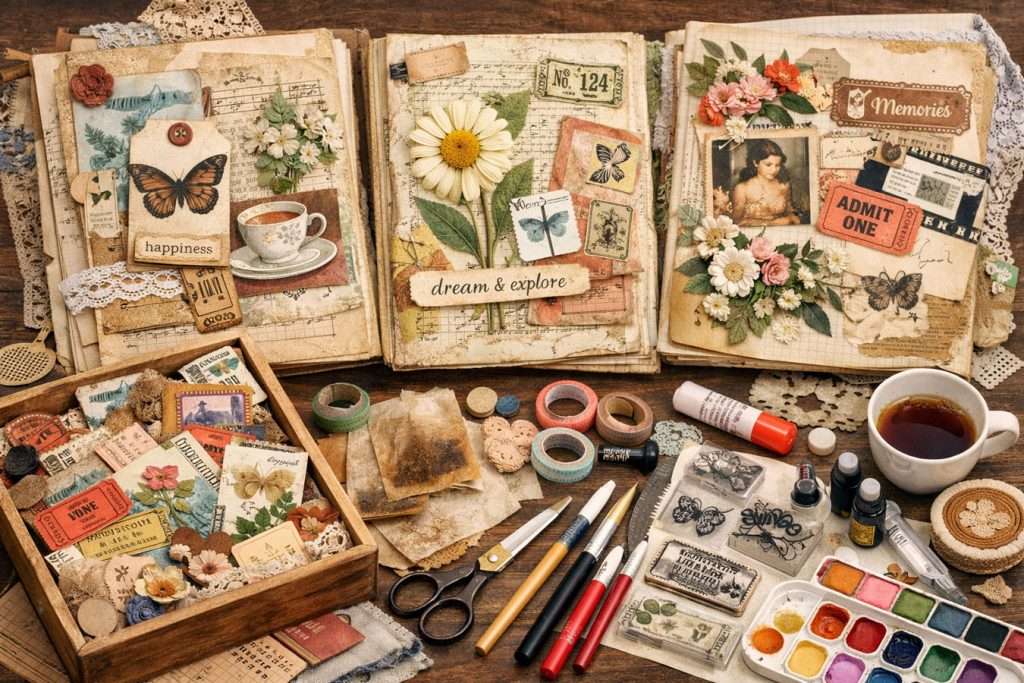
At its heart, easy junk journaling is the art of creating handmade books using recycled materials, found objects, and everyday “ephemera.” These journals often include items like old book pages, junk mail, envelopes, maps, postcards, fabric scraps, and even tea-stained paper.
There are no strict rules. Pages can be layered, messy, structured, or completely abstract. Some people use their journals for writing, others for art, and many for a mix of both. It is about expression, not perfection.
A Brief History of Junk Journaling
Junk journaling doesn’t have a single origin point, but it draws inspiration from traditional scrapbooking, diary-keeping, and collage art. Artists and crafters have long reused materials in creative ways, especially during times when resources were limited.
In recent years, the rise of online crafting communities has helped popularize junk journaling as its own distinct hobby. Its appeal lies in its accessibility and its emphasis on creativity over cost or skill level.
Who Junk Journals?
- One of the most appealing aspects of junk journaling is its inclusivity. It attracts:
- Artists looking for a relaxed, experimental space
- Crafters who enjoy paper, texture, and design
- Memory keepers preserving everyday moments
- People seeking a calming, mindful activity
- Seniors and individuals living alone who enjoy a quiet, engaging hobby
It is not limited by age or experience. Children can enjoy simple versions, while adults may dive into more detailed designs. Truly, anyone can do it.
Why People Love Junk Journaling
Junk journaling offers more than just a creative outlet. It provides:
- Relaxation: The process is slow, tactile, and soothing
- Creative freedom: There are no rules or expectations
- Sustainability: It encourages upcycling and reducing waste
- Personal storytelling: Each journal becomes a unique time capsule
- Mental wellness: It can help reduce stress and provide a sense of accomplishment
It is especially rewarding for those who want to create without pressure.
Materials You Can Use
One of the joys of junk journaling is that you can use almost anything. A mix of basic tools and creative materials will get you started.
Basic tools:
- Glue or glue sticks
- Scissors
- Ruler
- Pencil and eraser
- Craft knife (such as an X-Acto knife)
Paper and embellishments:
- Scrap paper and cardstock
- Old book pages
- Magazines and newspapers
- Stickers and die-cuts
- Washi tape
- Fabric scraps and lace
- Dried or pressed flowers
- Tags, labels, and tickets
Art supplies:
- Markers and pens
- Paints (acrylic or watercolour)
- Alcohol ink markers
- Stencils
- Clear stamps and rubber stamps
- Ink pads (or DIY alternatives like coffee staining)
Found and recycled items:
- Envelopes and packaging
- Maps and brochures
- Postcards
- Junk mail
- Tea bags and coffee (for staining paper)
A helpful tip is to keep all your scraps in a dedicated box or basket so they are easy to access when inspiration strikes.
Choosing Your Journal
You can either buy or make your own journal. Both options work beautifully.
Types of journals:
- Repurposed books (old novels or notebooks)
- Handmade journals using folded paper
- Ring-bound journals for flexibility
- Altered books (decorating an existing book)
Sizes:
- Small (A6): portable and quick to fill
- Medium (A5): the most popular, a balance of space and convenience
- Large (A4): ideal for more elaborate designs
Choose a size that feels comfortable rather than overwhelming.
Binding Methods
If you decide to make your own journal, there are several simple binding options:
- Binder rings (easy and adjustable)
- Pamphlet stitch (a basic sewing method)
- Sewn spine binding for a more traditional look
Each method has its own charm, and beginners often start with binder rings for simplicity.
How to Get Started
- Starting can feel intimidating, but simplicity is key.
- Begin with a few pages and basic supplies. Don’t aim for perfection. Instead:
- Glue down a piece of paper you like
- Add layers using scraps or fabric
- Write a note, memory, or quote
- Decorate with stamps, stickers, or drawings
The process matters more than the result. Let pages evolve naturally.
DIY Ideas and Simple Techniques
Here are a few easy ideas to try:
- Coffee-stained paper: Brush brewed coffee onto paper and let it dry for a vintage look
- Pockets and tuck spots: Glue three sides of a paper piece to create a pocket for keepsakes
- Flip pages: Attach smaller papers to create interactive elements
- Layering: Combine paper, fabric, and stamps for texture
- Hidden journaling: Write notes and tuck them into envelopes
These small techniques add depth and personality to your journal.
Themes to Explore
While some people prefer a free-form journal, others enjoy working around themes such as:
- Gratitude and daily reflections
- Travel memories
- Holidays and seasonal pages
- Camping or outdoor adventures
- Family and personal milestones
- Vintage or botanical themes
- Dreams, goals, or affirmations
Themes can guide your creativity without restricting it.
A Hobby for Everyone
Junk journaling is not just for experienced artists or adults. It can be adapted for any age or ability level. Children can focus on glueing and decorating, while adults might explore more detailed storytelling and design.
For seniors or those spending more time at home, it offers a meaningful and enjoyable way to stay engaged for hours at a time.
A Junk Journaling Tea Afternoon
Why not invite a few friends over for tea and a relaxed afternoon of creativity? Junk journaling is ideal for this kind of gathering because it is informal, low-pressure, and welcoming to all skill levels. There is no need for anyone to feel “artistic” to enjoy it.
Let your guests know in advance what to bring so everyone can contribute their own unique materials. You might suggest they gather:
- Old magazines, book pages, or newspapers
- Envelopes, junk mail, or packaging
- Photos, postcards, or travel mementos
- Fabric scraps, lace, or ribbon
- Stickers, stamps, or any decorative bits they enjoy
- A notebook or old book to turn into their journal
You can provide the shared essentials to make things easy and stress-free. Set out a simple crafting station with scissors, glue, rulers, pencils, and perhaps a few extras like markers, stamps, or stencils. Having everything ready allows your guests to settle in and start creating without hesitation.
To make the afternoon feel special, add a cosy touch with tea, coffee, and a few light treats. Soft background music can help create a calm, inviting atmosphere where conversation flows naturally alongside creativity.
If some guests are new to junk journaling, you might begin by demonstrating a simple page. Show how to layer paper, add a pocket, or create a coffee-stained effect. Then let everyone explore at their own pace. The beauty of this activity is that there is no right or wrong way to do it.
You may find that the conversation becomes just as meaningful as the crafting. Sharing stories behind collected items, laughing over old clippings, and exchanging ideas can make the experience feel even more personal and memorable.
By the end of the afternoon, each person will leave not only with the beginnings of a journal, but also with a sense of connection and a renewed appreciation for simple, creative moments.
Embracing Imperfection
Perhaps the most important thing to remember is that there are no rules. Pages do not need to match. Mistakes can become part of the design. In fact, imperfections often make a journal more beautiful and personal.
Junk journaling invites you to slow down, reuse what you already have, and create something entirely your own.
It is part art, part memory-keeping, and part quiet escape, all wrapped into one deeply satisfying hobby.
Keep Creating!
Ready to start your next creative project? Visit our Craft Store and discover a variety of unique stencils and fun craft accessories to help bring your ideas to life.
Looking for a little more inspiration? Take a look through our blog, where you’ll find more ideas, projects and creative inspiration to explore/
And if you love the idea of giving something handmade but don’t have the time to make it yourself, don’t worry! Our gifts collection has ready-to-give ideas for a variety of occasions.
Whether you’re in the mood to create something yourself or looking for a special gift, there’s always something fun to discover at The Craft Corner.
Watch & Create: Junk Journaling Craft Videos – YouTube and Facebook
Want to see some of these ideas in action? I’ve gathered a selection of fun button-craft videos to inspire your next project. Click any title to watch the video on YouTube or Facebook.
Facebook Links
Our Upcycled Life – Junk Journaling
WAIT… don’t throw out your used tea bags! Use for Junk Journal.
YouTube Video Links
Junk Journaling for Beginners – Tips and Tricks
Using Stickers in Junk Journaling!
Use Up Your Scraps & Make Gorgeous Collage Pieces for Your Journal
10 Crazy Simple Ideas for Junk Journaling
Easy Junk Journal Ideas to Decorate your Journal Pages & how to Create Cohesion
Fun Ideas for Your Junk Journal
Use Magazines to Make an Artist Book Junk Journal
Rubber Stamping Papers for Relaxation
Some Different Ways to Use Stamps
Pressed Flower Window Junk Journal
Die Cutting & Punch Techniques for Junk Journals
Use GIFT WRAP in your Junk Journal
How I use quotes in my junk journal